
Anterior Cervical Discectomy With Fusion
What is Anterior Cervical Discectomy and Fusion?
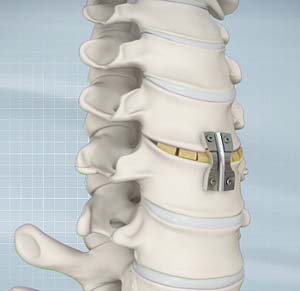
Anterior cervical discectomy with fusion is an operative procedure to relieve compression or pressure on nerve roots and/or the spinal cord due to a herniated disk or bone spur in the neck. The vertebra is approached from the from (anterior) of your neck.
Indications for Anterior Cervical Discectomy and Fusion
Anterior cervical discectomy with fusion is recommended only after non-surgical treatment approaches fail. Before recommending surgery, your surgeon considers several factors such as your health condition, age, lifestyle and anticipated level of activity following surgery.
Anterior Cervical Discectomy and Fusion Procedure
- Your surgeon makes a small incision in the front side of the neck and locates the source of neural compression (pressure zone).
- Then, the intervertebral disk that is compressing the nerve root will be removed partially or completely along with any bony material that is compressing or putting pressure on the nerves and producing pain.
- Spinal fusion implies placing a bone graft between the two affected vertebral bodies to encourage bone growth between the vertebrae.
- The bone graft acts as a medium for binding the two vertebral bones and grows as a single vertebra to stabilize the spine.
- A metal plates and screws are then used to stabilize the construct.
Postoperative Instructions Anterior Cervical Discectomy and Fusion
A specific postoperative recovery/exercise plan will be offered by your physician to help you return to normal activity at the earliest possible. The duration of hospital stay depends on this treatment plan. You will be able to wake up and walk by the end of the first day after the surgery and resume your work within 3-6 weeks, depending on your body’s healing status and the type of work/activity that you plan to resume. Majority of people are able to go home.
Risks or Complications of Anterior Cervical Discectomy and Fusion
In addition to the anesthetic complications, spinal surgery is associated with risks. Some of the potential complications associated with ACDF include subsequent pain, impaired healing and a possible need for additional surgery. There is risk of bleeding, esophageal injury, and hardware issues. Rarely, if bleeding continues after surgery, it can lead to difficulty breathing and possible death. It is important to have someone reliable with you at home for the few days to make sure they can check on you. There is also a risk of nerve damage, spinal cord damage, and paralysis.
Clinical Example
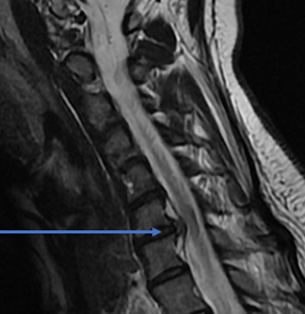
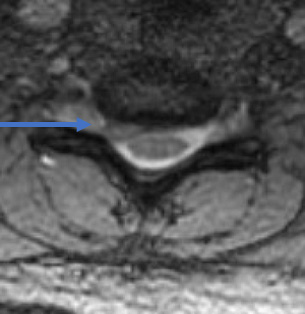
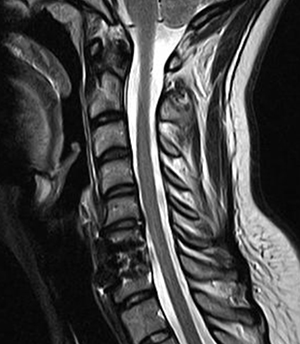
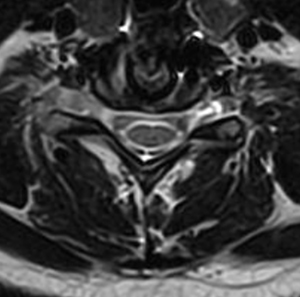
32 year old female comes with right arm pain that radiates all the way down to her fingers. We tried therapy, injections, oral pain medicine, and time. Because of the pain, a MRI showed a herniated disc in her neck on the right side (arrow). The left image is a side view and the right images is a cross section view.
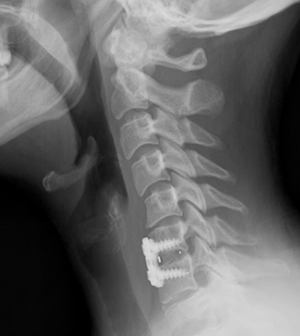
She underwent a minimally invasive anterior cervical discectomy and fusion after removing the herniated disc. A MRI shows resolution of the herniated disc.
You will need the Adobe Reader to view and print these documents.
Related Topics:
- Lumbar Laminectomy
- Posterior Lumbar Fusion
- Lumbar Endoscopic Discectomy
- Minimally Invasive Lumbar Discectomy
- Anterior Lumbar Interbody Fusion
- Minimally Invasive TLIF
- Kyphoplasty
- Minimally Invasive Spine Surgery
- Oblique Lumbar Interbody Fusion (OLIF)
- Posterior Cervical Laminectomy and Fusion
- Cervical Corpectomy and Strut Graft
- Endoscopic Spine Surgery
- Surgery for Scoliosis
- Cervical Laminoplasty
- Image-Guided Spine Surgery
- Anterior Cervical Discectomy with Fusion
- Artificial Cervical Disk Replacement
- Cervical Foraminotomy
- Extreme Lumbar Interbody Fusion