
Minimally Invasive Spine Surgery
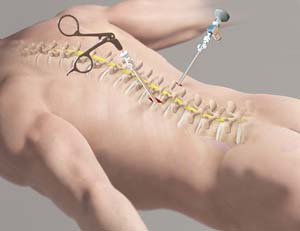
What is Minimally Invasive Spine Surgery?
Minimally invasive spine surgery (MISS) is the latest technology available to perform spinal surgeries through small, less than one-inch-long incisions. The goal is to perform the same surgery as traditional open spine surgery but eliminate the surgical insult to the patient and the surrounding muscles.
Advantages of Minimally Invasive Spine Surgery
MISS is aimed at decreasing the surgical footprint on the patient: eliminate the problem without touching normal parts. It possesses numerous benefits over the traditional spine surgery which include:
- Small surgery scars
- Reduced risk of infections
- Less blood loss during the surgery
- Less postoperative pain
- Quicker recovery
- Shorter hospital stay
- Quicker return to work and normal activities
Minimally Invasive Spine Surgery Procedure
- Minimally invasive spine surgery is performed through small incisions. Two common methods include
- Segmental tubular retractors
- Endoscopic spine surgery
- Both techniques minimize the damage to the muscles and soft tissues and decreases the blood loss during the surgery
- A microscope or an endoscope (a very small camera) is used to magnify the view of the problem
Risk and Complications of Minimally Invasive Spine Surgery
The risks and complications of the surgery may include
- Infection
- Bleeding
- nerve injury
- spinal cord injury
- spinal fluid leakge
- repeat surgery
- incomplete pain relief
Complications due to general anesthesia may also occur. These are the same risks as traditional spine surgery.
Related Topics:
- Lumbar Laminectomy
- Posterior Lumbar Fusion
- Lumbar Endoscopic Discectomy
- Minimally Invasive Lumbar Discectomy
- Anterior Lumbar Interbody Fusion
- Minimally Invasive TLIF
- Kyphoplasty
- Minimally Invasive Spine Surgery
- Oblique Lumbar Interbody Fusion (OLIF)
- Posterior Cervical Laminectomy and Fusion
- Cervical Corpectomy and Strut Graft
- Endoscopic Spine Surgery
- Surgery for Scoliosis
- Cervical Laminoplasty
- Image-Guided Spine Surgery
- Anterior Cervical Discectomy with Fusion
- Artificial Cervical Disk Replacement
- Cervical Foraminotomy
- Extreme Lumbar Interbody Fusion