
Posterior Cervical Fusion
What is Posterior Cervical Fusion?
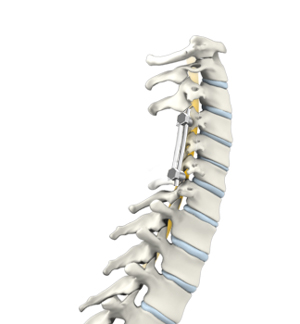
Posterior cervical fusion (PCF), a surgical procedure performed through the back of the neck, involves joining or fusing two or more damaged cervical vertebrae. Typically this is done only when 3 or more vertebrae are damaged. The fusion of vertebrae is also known as arthrodesis. To aid in fusion, titanium screws and rods are used to link the bone together.
Indications of Posterior Cervical Fusion
PCF may be employed for the management of cervical fractures, bone dislocations and deformities due to an abnormal curvature of the cervical vertebrae. Also if there is a lot of arthritis, the fusion may be done to eliminate some of the neck pain due to arthritic joints.
Posterior Cervical Fusion Procedure
You will be made to lie face down on the operation table after going to sleep with general anesthesia. A small incision is made over the center of the back of the neck. The muscles and the soft tissues are then moved away from the spine. The nerves and/or spinal cord are then relieved of compression due to arthritis. Once the nerves are freed, screws and rods are place to stabilize the spine. Around the screws and rods, your bone is laid down to help with the fusion process.
Bone graft is “recycled” from the bone that was causing nerve compression. There is rarely a need to take bone from your hip. Finally, the retracted muscles and soft tissues are placed in their normal positions and the wound is sutured.
Postoperative Care following Posterior Cervical Fusion
You maybe discharge from the hospital 2-3 days of the surgery. A neck brace may be provided depending on how strong your bones are and how extensive the surgery was.
Physical therapy is recommended after 4-6 weeks of the surgery. Physical therapists help you perform routine activities without exerting any extra stress on the neck.
Risk and Complications of Posterior Cervical Fusion
Every major surgery is associated with potential complications. Some of the complications associated with posterior cervical fusion include:
- Complications related to anesthesia
- Blood clot in your legs or lungs
- Non-union or pseudarthrosis
- Infection
- Damage to the spinal nerves
- Spinal cord injury resulting in paralysis
- Problem related to bone graft
- Persistent pain
- Screw mal positioning
Related Topics:
- Lumbar Laminectomy
- Posterior Lumbar Fusion
- Lumbar Endoscopic Discectomy
- Minimally Invasive Lumbar Discectomy
- Anterior Lumbar Interbody Fusion
- Minimally Invasive TLIF
- Kyphoplasty
- Minimally Invasive Spine Surgery
- Oblique Lumbar Interbody Fusion (OLIF)
- Posterior Cervical Laminectomy and Fusion
- Cervical Corpectomy and Strut Graft
- Endoscopic Spine Surgery
- Surgery for Scoliosis
- Cervical Laminoplasty
- Image-Guided Spine Surgery
- Anterior Cervical Discectomy with Fusion
- Artificial Cervical Disk Replacement
- Cervical Foraminotomy
- Extreme Lumbar Interbody Fusion