
Cervical Herniated Disk
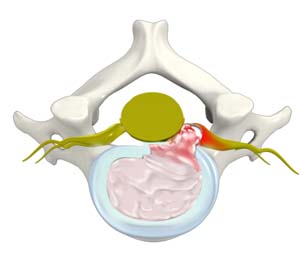
Cervical Anatomy
The cervical region consists of 7 cervical vertebrae (C1-C7), with intervertebral disks between each vertebra that function to provide flexibility to the backbone. The disc is soft and compressible to help provide mobility and flexibility to the spine. The disc has a tough outer ring called the annulus which helps contain the gel-like center the nucleus. The outer and inner structure provide the structure to the disc.
What is Cervical Disk Herniation?
A disc herniation is when there is a weak spot in the outer ring allowing some of the soft gel like material to come out of disc. The gel like material causes mechanical compression to the nerve and can cause chemical irritation to the nerves around it. It should be noted a herniation can occur without causing symptoms and is commonly found as we age. Just because there is a herniation does not mean pain.
Causes of Cervical Herniated Disk
The foremost causes and risk factors involved in the development of cervical herniated disk are advanced age, trauma or injury, abrupt neck movements, smoking, and genetic factors.
Symptoms of Cervical Herniated Disk
Often times, cervical herniated disc does not cause pain. Occasional it causes issue if there is nerve compression. If it presses on the nerve, it can cause radiculopathy. Radiculopathy is a medical term used to describe the neurological deficits that can occur from pressure on the nerves which causes arm or finger weakness, numbness, and pain; this is the equivalent of sciatica in the arms.
If it pressed on the spinal cord, it can cause myelopathy. Myelopathy presents with hand clumsiness, burning pain the hands, and gait difficulty. If the compression becomes severe it can result in paralysis.
Diagnosis of Cervical Herniated Disk
The diagnosis of a cervical herniated disk involves reviewing your medical history and performing a physical examination. Physical examination may also involve the analysis of the neck movements to determine the source of pain and related injured tissues. Furthermore, various new advanced imaging techniques such as MRI scan, myelogram, CT scan, X-rays, electromyography (EMG) and nerve conduction velocity (NCV) tests, are widely used for accurate diagnosis, as confirmatory tests.
Treatment of Cervical Herniated Disk
The well-established non-surgical interventions for herniated disc include adequate rest, massage of the neck, ice or heat compression, physical therapy, strengthening exercises, chiropractic care, and medications, including epidural steroid injections. In addition, widely accepted holistic therapies such as acupuncture, acupressure, and nutritional supplements are also extensively used.
Surgery is recommended if you do not respond to non-surgical measures if you have just neck pain or radiculopathy. If you have myelopathy, surgery is the only method of treatment.
Surgical options include:
- ACDF
- Disc Replacement
- Posterior minimally invasive foraminotomy
- Cervical laminectomy
- Cervical laminectomy and fusion
- Cervical laminoplasty